In early education, how children learn matters just as much as what they learn. Research and classroom experience consistently show that young children thrive when learning is active, meaningful, and connected to the real world. This is where project-based learning plays a powerful role.
Project-based learning in early education moves beyond worksheets and memorization. It invites children to explore ideas deeply through hands-on projects that grow from their natural curiosity. When done well, it builds confidence, critical thinking, and a genuine love of learning that lasts far beyond the early years.
What Is Project-Based Learning in Early Education?
Project-based learning is an approach where children investigate real questions, problems, or ideas over time. Instead of isolated lessons, learning unfolds through projects that integrate multiple skills and subjects.
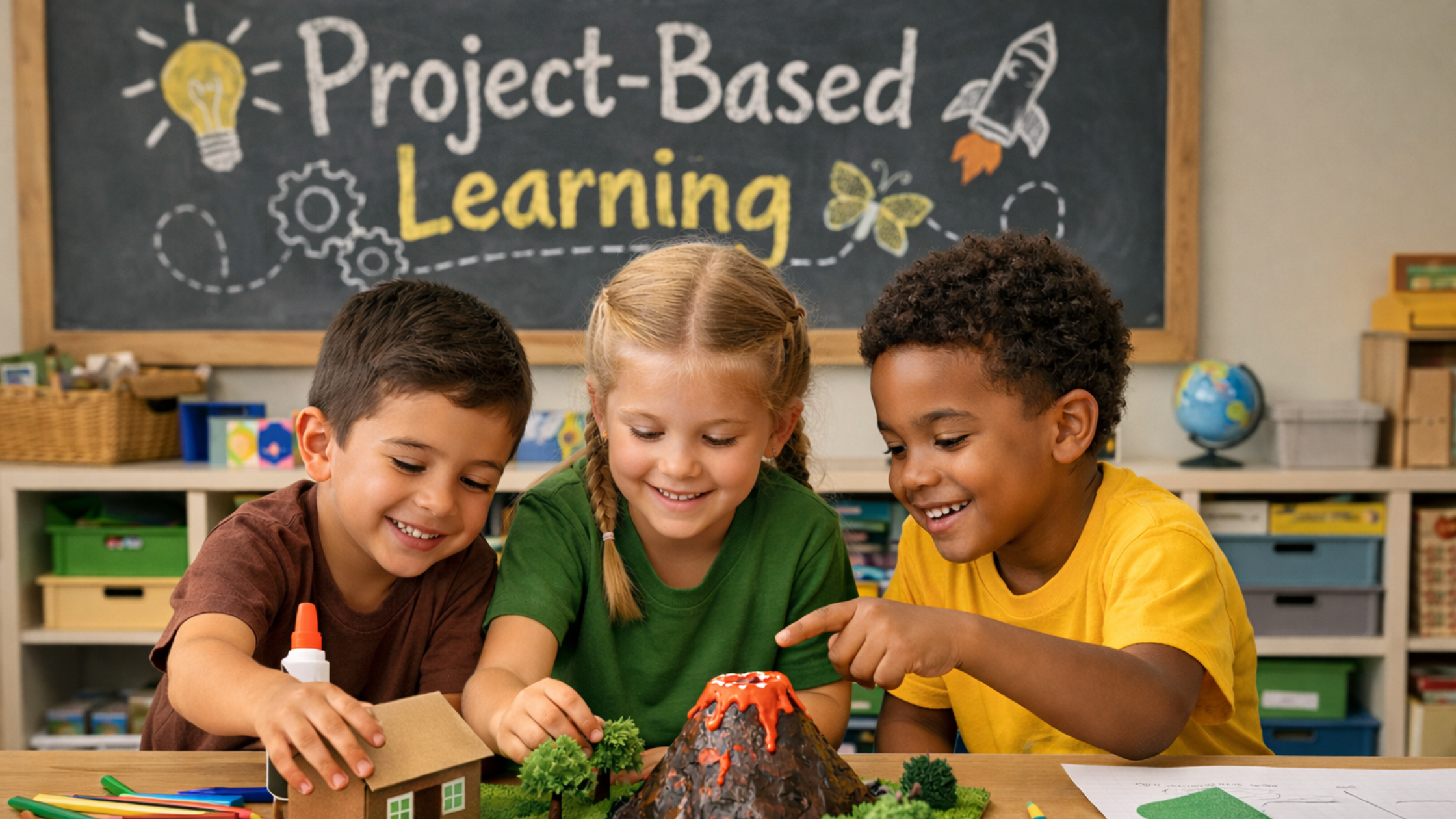
In early education, this might look like children designing a garden, building a model neighborhood, studying how animals live, or exploring how water moves through the environment. The key is that children are active participants. They ask questions, make decisions, test ideas, and reflect on what they discover.
This approach respects how young children naturally learn through doing, observing, and experimenting.
Why Project-Based Learning Works So Well for Young Children
Young children are wired to explore. Project-based learning aligns with their developmental needs in ways traditional instruction often does not.
First, it creates meaningful context. Children understand ideas better when learning is connected to something tangible. Measuring soil for planting or designing a structure gives math and science real purpose.
Second, it supports sustained attention. When children are invested in a project, they stay engaged longer. They are not completing tasks just to finish them. They are motivated by curiosity and ownership.
Third, it encourages deeper understanding. Instead of learning facts in isolation, children revisit ideas repeatedly through different activities. This repetition within meaningful work strengthens comprehension and memory.
Building Real Skills Through Hands-On Projects
Project-based learning develops far more than academic knowledge. It builds essential life skills that are especially important in early education.
Children learn problem-solving by facing challenges that do not have one right answer. They learn communication by explaining ideas, asking for help, and collaborating with peers. They develop perseverance by revising plans and learning from mistakes.
Fine motor skills, language development, early math, and scientific thinking all grow naturally within projects. These skills are not taught separately. They emerge organically through purposeful activity.
This kind of learning prepares children to think flexibly and confidently as they grow.
The Role of the Teacher in Project-Based Learning
Effective project-based learning does not mean children are left on their own. Teachers play a crucial guiding role.
Educators observe carefully, listen closely, and introduce resources or questions at the right moment. They help children reflect on their work and connect experiences to broader ideas.
Rather than delivering information, teachers design environments where discovery can happen. This requires deep understanding of child development and intentional planning.
When done thoughtfully, project-based learning balances freedom with structure. Children feel supported while still having space to explore independently.
How Project-Based Learning Supports Whole-Child Development
Early education should nurture the whole child. Project-based learning supports cognitive, social, emotional, and physical growth together.
Cognitively, children develop reasoning, creativity, and problem-solving skills. Socially, they practice cooperation, empathy, and shared responsibility. Emotionally, they gain confidence as their ideas are valued and their efforts lead to visible outcomes.
Physically, hands-on work strengthens coordination and body awareness. Whether children are building, drawing, planting, or sorting materials, learning involves the whole body.
This integrated growth is one reason project-based learning is so effective in early childhood settings.
Project-Based Learning Versus Traditional Instruction
Traditional early education often relies on segmented lessons and predetermined outcomes. While this can deliver information efficiently, it may not foster deep understanding or intrinsic motivation.
Project-based learning offers a different path. Learning unfolds at a pace that matches children’s curiosity. Knowledge is applied, not just absorbed.
This does not mean academic rigor is lost. In fact, project-based learning often increases rigor by asking children to think more deeply, make connections, and explain their reasoning.
The difference lies in how learning is experienced. Children are not passive recipients. They are active contributors.
What Parents Should Look For in a Project-Based Classroom
Not all hands-on activities are truly project-based. Parents should look for environments where projects evolve over time, integrate multiple subjects, and reflect children’s interests.
Strong programs document learning through photos, discussions, and reflections. Teachers can explain how projects support specific skills and developmental goals.
Most importantly, children should be able to talk enthusiastically about what they are working on and why it matters to them.
When children are deeply engaged, it shows.
The Long-Term Impact of Project-Based Learning
The benefits of project-based learning extend well beyond early education. Children who experience this approach often develop strong self-direction, curiosity, and resilience.
They learn how to learn. They become comfortable asking questions, seeking solutions, and working through challenges.
These qualities support academic success, emotional wellbeing, and lifelong learning. In a rapidly changing world, these skills are more valuable than ever.
Frequently Asked Questions
What is project-based learning in early education?
Project-based learning in early education is an approach where children learn through extended, hands-on projects based on real questions or interests. Instead of isolated lessons, children explore topics deeply by building, experimenting, discussing, and reflecting, which supports understanding, creativity, and confidence.
How does project-based learning support academic skills?
Project-based learning strengthens academic skills by placing them in meaningful contexts. Children naturally use math, language, science, and problem-solving while working on projects. This repeated, purposeful practice helps skills develop more deeply than rote instruction alone.
Is project-based learning suitable for young children?
Yes, project-based learning is highly suitable for young children because it aligns with how they naturally learn. Young learners are curious and active, and projects allow them to explore ideas through play, movement, and hands-on experiences while still building foundational academic skills.
How can parents support project-based learning at home?
Parents can support project-based learning by encouraging curiosity, asking open-ended questions, and allowing children time to explore interests. Simple activities like cooking, gardening, or building can become meaningful projects when children are involved in planning and problem-solving.
A Warm Invitation
Visit Mountain Oak Community School
If you’d like to see how project-based learning comes to life in our classrooms, we invite you to visit Mountain Oak Community School and experience our learning environment in person.
📍 Address: 1455 Willow Creek Road, Prescott, AZ 96768
📞 Phone: 928-541-7700
📧 Email: info@mountainoak.obus.io
We’d love to welcome you and answer any questions about our programs, philosophy, and admissions.