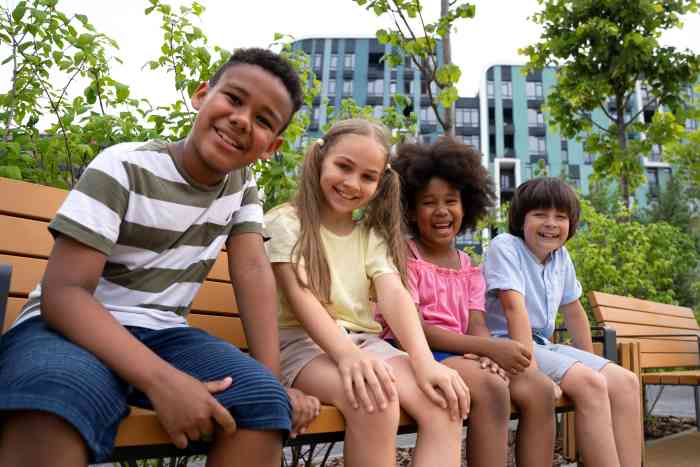
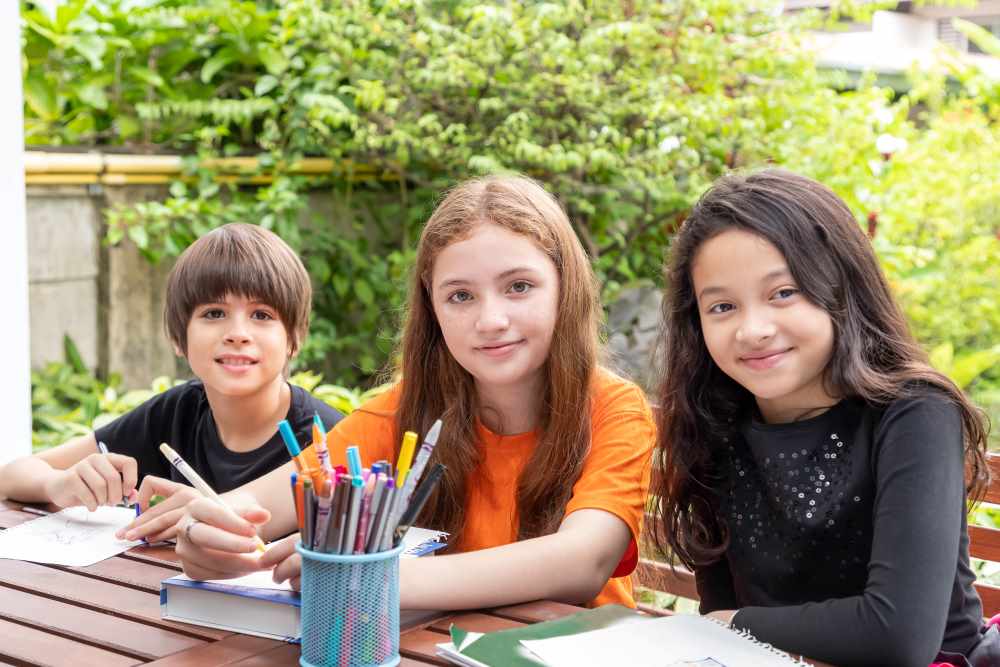
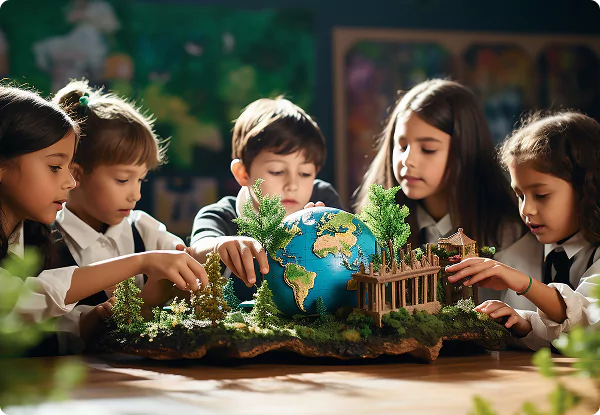
Welcome to Third Grade: Living on the Earth
The third grade year marks a significant developmental milestone as children transition from the dreamy, imaginative world of early childhood into a more practical engagement with the world around them. At ages 8 and 9, students are ready to explore their relationship with the Earth in concrete, hands-on ways.

Developmental Focus: Third graders are developing their sense of practical capability and their understanding of cause and effect. They are ready to take on real responsibilities and see the concrete results of their efforts. This curriculum honors their growing independence while providing the structure and guidance they need to succeed.
Core Academic Areas
Language Arts
Building upon the foundation established in earlier grades, third-grade language arts focuses on developing more sophisticated communication skills while maintaining the joy and creativity that characterizes Waldorf education.
- Grammar and Parts of Speech: Introduction to nouns, verbs, and adjectives through imaginative stories and activities
- Enhanced Writing: Longer compositions, descriptive writing, and personal narratives
- Reading Development: Transition to independent reading with chapter books and diverse literature
- Spelling and Vocabulary: Word families, phonetic patterns, and vocabulary building through context
- Oral Communication: Presentations, storytelling, and class discussions
Mathematics
Mathematics in third grade emphasizes practical application and real-world problem solving, connecting mathematical concepts to daily life and the "Living on the Earth" theme.
- Long Division: Introduced through practical problems and visual representations
- Times Tables: Mastery of multiplication facts through rhythmic practice and games
- Measurement: Linear, liquid, and weight measurements using both standard and metric systems
- Time and Calendar: Advanced time concepts, elapsed time, and calendar calculations
- Money and Economics: Real-world applications through classroom market activities
- Fractions: Introduction to fractional concepts through cooking and practical activities
Geography
Geography studies expand students' understanding of the world, connecting local knowledge to global awareness.
- Local Geography: Detailed study of our immediate environment and bioregion
- Map Skills: Creating and reading various types of maps
- Climate and Weather: Understanding weather patterns and their effects on human life
- Cultural Geography: How geography influences human culture and lifestyle
- Environmental Stewardship: Understanding our responsibility to care for the Earth
Practical Life Activities
Practical life activities form the heart of the third-grade curriculum, allowing students to develop real-world skills while connecting deeply with the theme of “Living on the Earth.”
Study of Seven Grains
A special focus on the seven ancient grains provides a comprehensive understanding of human nutrition and agricultural history. Students explore wheat, rice, corn, barley, rye, oats, and millet through cooking, growing, and cultural studies, learning how these grains have sustained human civilizations throughout history.
Students learn essential cooking skills while exploring nutrition, food sources, and cultural food traditions. Weekly cooking activities include:
- Bread baking and understanding fermentation
- Soup making using seasonal vegetables
- Food preservation techniques
- International cuisine exploration
- Kitchen safety and hygiene
From sheep to shawl, students explore the complete process of creating textiles:
- Processing wool from raw fleece
- Natural dyeing with plants and minerals
- Spinning wool into yarn
- Simple weaving projects
- Understanding global textile traditions
Hands-on agricultural experiences teach students about food systems and environmental stewardship:
- Seasonal planting and harvesting
- Composting and soil health
- Seed saving and plant propagation
- Organic farming principles
- Weather observation and recording
Construction activities develop spatial reasoning, planning skills, and practical problem-solving:
- Tool safety and proper usage
- Measuring and planning structures
- Working with natural materials
- Collaborative building projects
- Understanding structural principles
Shelter Studies Project
The Shelter Studies project is a cornerstone of the third-grade curriculum, integrating multiple subjects while addressing the fundamental human need for shelter.
Learning About Shelters Around the World
Students begin by exploring diverse shelter types from different cultures and climates:
- Arctic igloos and their thermal properties
- Desert adobe houses and cooling techniques
- Tropical stilt houses and flood adaptation
- Nomadic tents and portable architecture
- Modern sustainable housing innovations
Selecting and Building a Shelter Project
Each student chooses a shelter type to research in depth and then constructs a detailed model:
- Research the cultural and environmental context
- Understand the materials and construction methods
- Create detailed plans and measurements
- Build a scale model using appropriate materials
- Test the shelter's effectiveness for its intended purpose
Writing Component
The project culminates in comprehensive written work that includes:
- Detailed research report on the chosen shelter type
- Step-by-step construction journal
- Reflection on the building process and challenges
- Comparison with other shelter types studied
- Presentation to younger students
Creative Arts
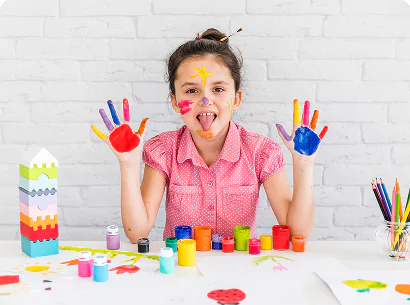
Painting and Drawing
Artistic expression appropriate for 8–9 year olds focuses on:
- Watercolor techniques and color theory
- Observational drawing from nature
- Illustration for their shelter studies and other projects
- Seasonal and cultural art traditions
- Integration with main lesson content
Music
Musical education includes both individual and ensemble experiences:
- Recorder: Continued development of technique and repertoire
- Singing: Part singing, rounds, and cultural songs
- Rhythm: Complex rhythmic patterns and percussion
- Music Theory: Introduction to notation and musical concepts
- Cultural Music: Songs and instruments from around the world
Form Drawing
Form drawing continues to develop students’ spatial awareness, concentration, and aesthetic sense through increasingly complex patterns and designs that connect to their practical work and cultural studies.
Advanced Knitting Skills
Building on previous knitting experience, third graders tackle more complex projects:
- Knitting in the round for hats and mittens
- Color work and simple pattern knitting
- Increasing and decreasing techniques
- Finishing techniques and seaming
- Design and planning their own projects
Introduction to Crochet
Students learn basic crochet techniques as an alternative fiber art:
- Basic crochet stitches and chain work
- Simple projects like dishcloths and bookmarks
- Understanding the differences between knitting and crochet
- Cultural traditions of crochet work
Handwork

Physical Education
Physical education for third graders emphasizes coordination, teamwork, and the joy of movement while supporting their overall development.
- Cooperative Games: Activities that build teamwork and social skills
- Traditional Games: Cultural games from around the world
- Seasonal Activities: Outdoor activities that connect to the natural world
- Balance and Coordination: Activities that support physical development
- Strength Building: Age-appropriate exercises and challenges
- Spatial Awareness: Games that develop understanding of space and movement
Foreign Language: Spanish
Spanish language learning continues to emphasize oral communication and cultural understanding through immersive, activity-based learning.
- Conversational Skills: Expanded vocabulary for daily activities and practical life
- Cultural Studies: Exploration of Spanish-speaking countries and their traditions
- Songs and Games: Traditional Spanish songs, games, and rhymes
- Practical Application: Using Spanish in cooking, gardening, and craft activities
- Beginning Reading: Introduction to Spanish texts and simple reading
- Writing Practice: Basic Spanish writing and letter formation
Science and Nature Studies
Science education in third grade is deeply integrated with the “Living on the Earth” theme, emphasizing observation, experimentation, and environmental stewardship.
Environmental Science
- Ecosystem studies and interdependence
- Water cycle and weather patterns
- Soil composition and health
- Plant and animal adaptations
- Human impact on the environment
Practical Science
- Simple machines and their applications
- Properties of materials used in building
- Food science through cooking activities
- Natural dyes and color chemistry
- Weather observation and recording
Environmental Stewardship
Students develop a deep sense of responsibility for the Earth through:
- Waste reduction and recycling projects
- Energy conservation awareness
- Habitat restoration activities
- Sustainable living practices
- Community environmental action projects


School Life Integration
Integration with Learning
These responsibilities are not separate from academic learning but are integrated into mathematics (measuring garden plots), science (plant biology), writing (garden journals), and social studies (food systems and sustainability).
Care of Chickens
Third graders take on the important responsibility of caring for the school’s chickens, learning about:
- Daily feeding and watering routines
- Coop cleaning and maintenance
- Egg collection and handling
- Chicken behavior and health monitoring
- The role of chickens in sustainable agriculture
School Garden Responsibilities
Students maintain specific sections of the school garden throughout the year:
- Seasonal planting and crop rotation
- Weeding, watering, and general maintenance
- Harvest activities and food preparation
- Composting and soil improvement
- Seed saving for future plantings
Assessment and Growth
Assessment in third grade focuses on the whole child, recognizing that growth occurs in multiple dimensions simultaneously.
Portfolio Development
Students maintain comprehensive portfolios that include:
- Academic work samples showing progress over time
- Photographs of practical projects and activities
- Self-reflection writings and goal setting
- Teacher observations and assessments
- Parent and student conference notes
Practical Skills Assessment
Students demonstrate mastery through real-world applications:
- Cooking a complete meal independently
- Completing a building project from start to finish
- Teaching a younger student a new skill
- Presenting their shelter project to the community
- Taking leadership in garden or animal care
Preparing for Fourth Grade
As third graders complete their year of “Living on the Earth,” they are well-prepared for the expanded horizons of fourth grade. They have developed:
- Practical Competence: Real skills in cooking, building, gardening, and creating
- Environmental Awareness: Deep understanding of their relationship with the natural world
- Academic Foundation: Strong skills in reading, writing, and mathematics
- Social Responsibility: Experience in caring for animals, plants, and community spaces
- Cultural Understanding: Appreciation for diverse ways of living on Earth
- Creative Expression: Confidence in artistic and musical endeavors
- Physical Capability: Coordination, strength, and body awareness
The Foundation for Lifelong Learning: Third grade establishes the foundation for all future learning by connecting students to the practical realities of human life on Earth. Students leave third grade with a deep sense of capability, responsibility, and wonder that will serve them throughout their educational journey and beyond.