Introduction
Welcome to our Kindergarten program, where we embrace the natural wonder and curiosity of young children. Our curriculum is thoughtfully designed around the principles of wonder, imitation, rhythm, and deep connection to the natural world. We believe that children at this age learn best through meaningful experiences that engage their whole being – body, soul, and spirit.
In our nurturing environment, we honor the developmental needs of five and six-year-old children by providing a rich tapestry of activities that support their natural growth patterns. Through reverent attention to the seasons, daily rhythms, and the beauty of the world around us, we create a foundation for lifelong learning and healthy development.
Learning Through Play
The Foundation of Early Learning
Children learn through imitation, repetition, rhythm, and integrating experiences in play
At Mountain Oak, we understand that kindergarten children are naturally inclined to learn through imitation and play. Their learning happens through their whole being as they observe, absorb, and recreate the world around them. We provide rich opportunities for meaningful work and play that allow children to develop their capacities organically.
Our approach recognizes that young children experience wonder and reverence through their devotion to the natural world. We cultivate this innate connection by spending time outdoors in all seasons, observing the cycles of nature, and bringing the beauty of the natural world into our classroom activities.
Through repetition and rhythm, children develop security and confidence. The predictable flow of our days and weeks provides a container within which children can explore, create, and grow. This rhythmical approach supports healthy development of memory, attention, and social skills.
Circle Time
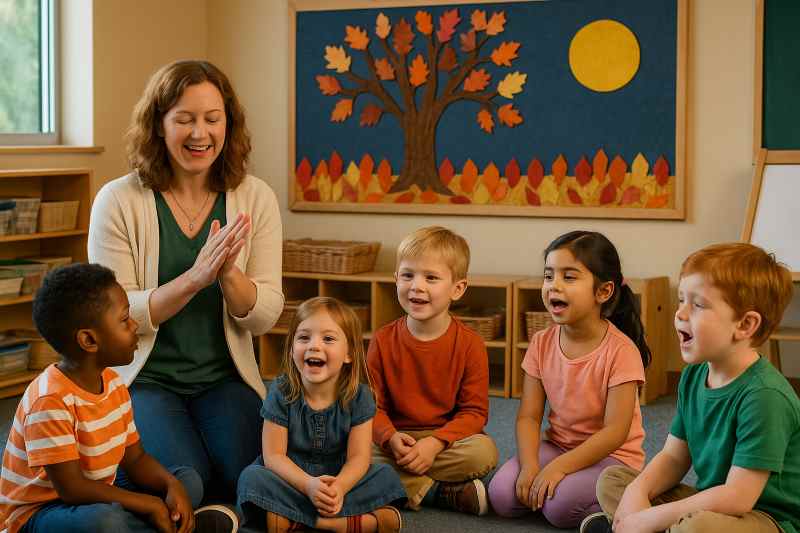
Our daily circle time is a cornerstone of the kindergarten experience, featuring seasonally based activities that incorporate meaningful teacher gestures, songs, verses, games, and poems. These activities are carefully chosen to reflect the natural rhythms of the year and to support the children’s developing sense of time and place.
Gross Motor Development
Large movement activities that strengthen the body and develop spatial awareness, coordination, and balance through running, jumping, and rhythmic movement.
Expansive Movements
Activities that encourage children to reach out into space, developing confidence and connection to their environment through gesture and movement.
Fine Motor Skills
Delicate finger and hand movements through finger plays, clapping games, and small manipulative activities that prepare children for writing and detailed work.
Contractive Movements
Quiet, inward movements that help children develop focus, concentration, and the ability to gather their forces for learning and attention.


Storytelling
Daily storytelling is a treasured part of our curriculum that builds memory, pictorial thinking, language development, and vocabulary. We use rich, living language as preparation for reading and writing, understanding that children need to develop a strong foundation in oral language before moving to written forms.
Our Story Repertoire Includes:
- Fairy Tales from Around the World: Classic stories that speak to universal human experiences and moral development
- Nature Tales: Stories that deepen children's connection to the natural world and seasonal cycles
- Repetitive Stories: Tales with recurring patterns that support memory development and language acquisition
- Cultural Stories: Narratives that introduce children to diverse traditions and ways of life
Through storytelling, children develop their capacity for sustained attention, imagination, and inner picturing. These skills form the foundation for later academic learning and creative thinking. The stories we choose are carefully selected to nourish the children’s developing sense of beauty, truth, and goodness.
Weekly Activities
Our weekly rhythm includes a rich variety of activities that engage children’s hands, hearts, and minds. Each day brings different opportunities for creative expression, practical skills, and meaningful work.
Artistic Activities
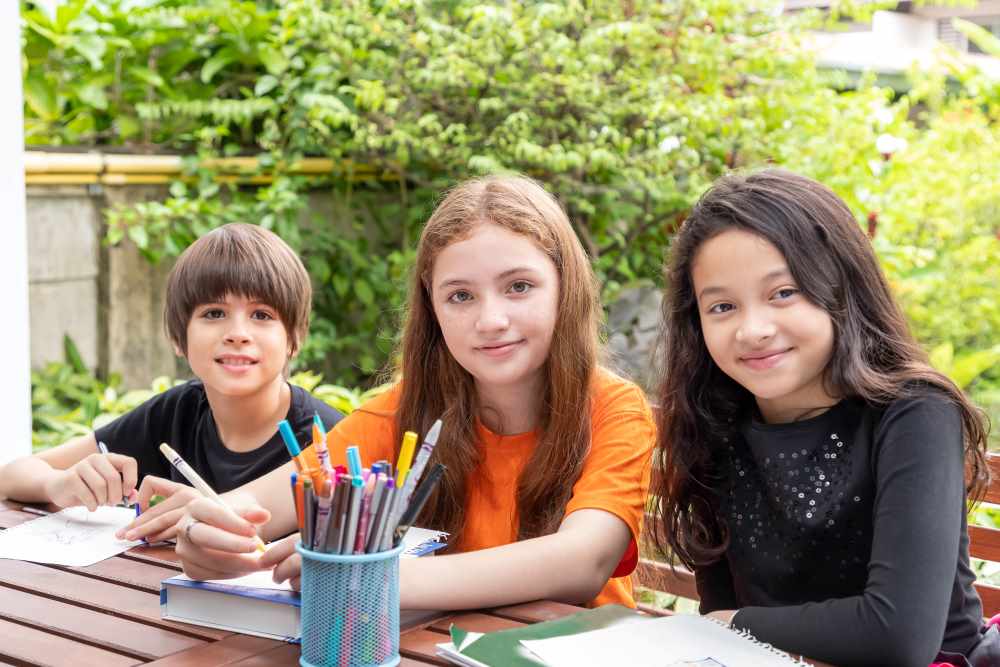
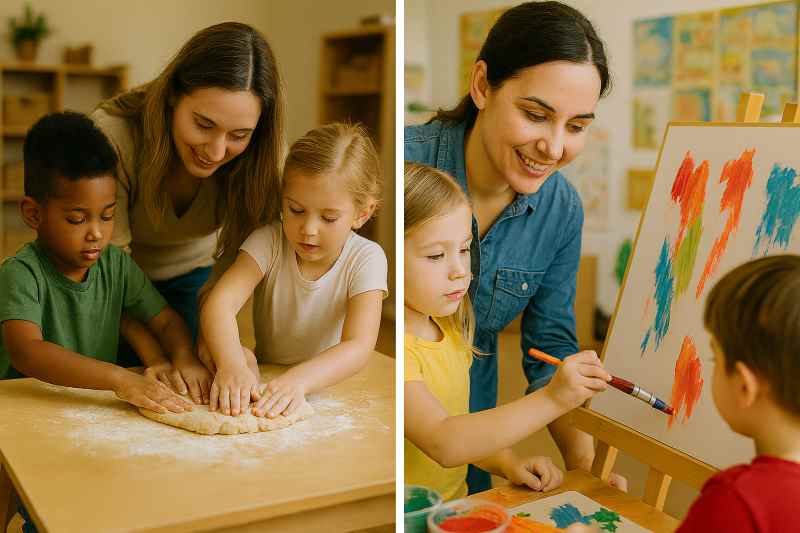
- Watercolor painting with natural pigments and seasonal themes
- Form drawing and illustration work
- Beeswax modeling to develop hand strength and creativity
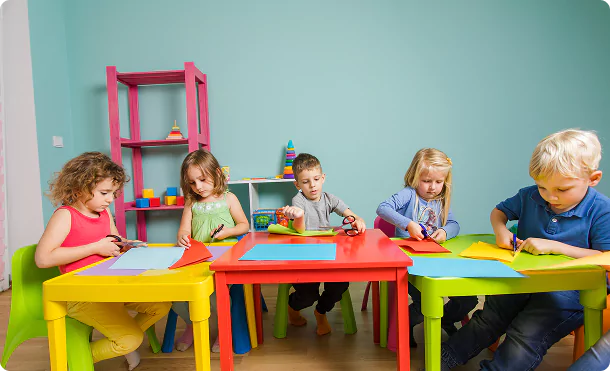
- Seasonal crafts using natural materials
- Writing and drawing letters and numbers through artistic practice
Outdoor Play and Exploration
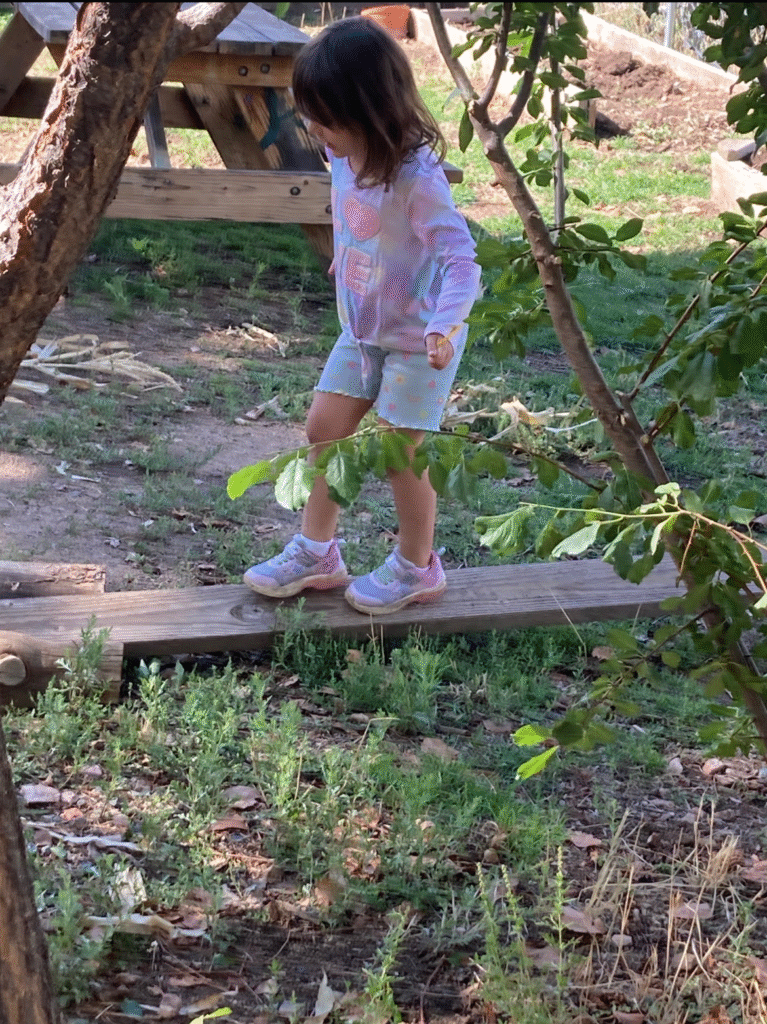
- Daily exposure to natural elements: sun, rain, dirt, warmth, and cold
- Running, jumping, skipping, and climbing activities
- Nature walks and seasonal observations
- Building with natural materials
- Gardening and plant care
- Free play in natural settings
Domestic Activities
- Food preparation including chopping, cutting, and mixing
- Baking bread and seasonal treats
- Setting tables and serving meals
- Cleaning and caring for our shared spaces
Practical Life Skills
- Hand sewing and simple needlework projects
- Knitting and finger knitting for fine motor development
- Gardening activities throughout the seasons
- Care of classroom plants and environment
Festivals and Celebrations
Throughout the year, we celebrate various festivals that connect us to the rhythms of nature and cultural traditions. These celebrations provide opportunities for community building, artistic expression, and deepening our connection to the cycles of the earth.
Seasonal Celebrations
Our festivals honor the changing seasons and help children develop a sense of time, tradition, and community connection
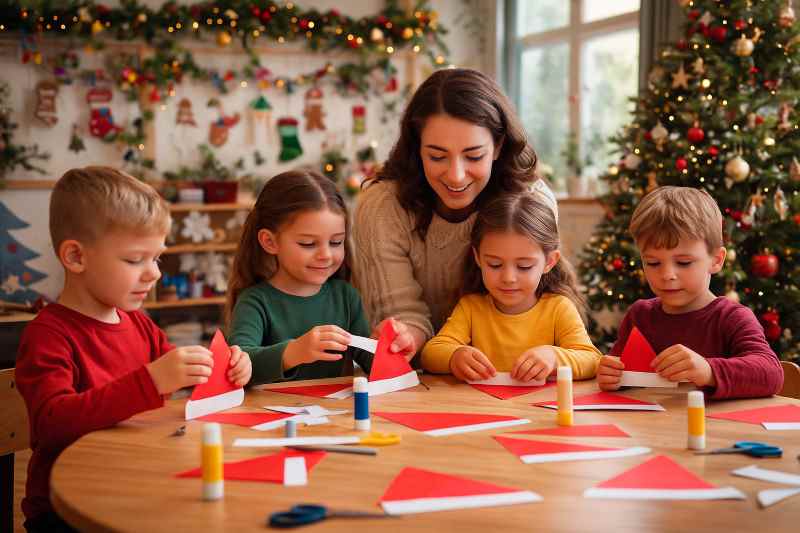
Our festival celebrations include harvest festivals, winter light celebrations, spring planting ceremonies, and summer solstice activities. Each festival is prepared for weeks in advance through songs, stories, crafts, and special foods, creating anticipation and meaning for the children.
These celebrations also provide opportunities for families to come together and share in the life of our school community. Through festivals, children experience the joy of preparation, the beauty of tradition, and the warmth of community celebration.
These celebrations also provide opportunities for families to come together and share in the life of our school community. Through festivals, children experience the joy of preparation, the beauty of tradition, and the warmth of community celebration.
Rhythmical Environment
Consistent weekly rhythms provide a profound sense of security for young children. Our carefully structured week follows a predictable pattern that allows children to anticipate and prepare for different types of activities. This rhythm supports healthy development by providing both variety and consistency.
Each day of the week has its own character and focus, whether it’s baking day, painting day, or handwork day. This rhythmical approach helps children develop a healthy relationship with time and creates a container within which spontaneous learning and creativity can flourish.
The security provided by rhythm allows children to relax into their learning, knowing what to expect while remaining open to the magic and wonder that each day brings. This foundation of trust and predictability supports all other aspects of their development.
Learning Expectations
By the end of kindergarten, we expect children to have developed a strong foundation in the following areas:
Following Directions
- Ability to follow verbal sequential directions and movements, developing listening skills and body awareness through practice and repetition.
Letter and Number Recognition
- Familiarity with lowercase and uppercase alphabet letters and numbers 1-100 through artistic and practical activities rather than rote memorization.
Time Awareness
- Cognitive sequencing understanding of time, seasons, months, and weeks through daily rhythm and seasonal celebrations.
Self-Care and Environmental Care
- Development of personal responsibility and care for their environment, including classroom maintenance and respect for materials.
These expectations are met through integrated, meaningful activities rather than isolated academic exercises. Children develop these capacities naturally through their engagement with our rich curriculum and supportive environment.
Aftercare/Nap Program
For families needing extended care, we offer an afternoon program that honors the natural rhythms and needs of young children. This program is available for afternoon enrollment and features a peaceful environment designed to support rest and quiet activities.
Our aftercare program includes gentle lyre music to create a calming atmosphere, opportunities for rest and quiet play, and continued connection to the natural world through outdoor time when weather permits. This extension of our school day maintains the same principles of rhythm, beauty, and reverence that characterize our morning program.
Children who participate in aftercare continue to experience the nurturing, homelike environment that supports their healthy development throughout the extended day.